What Is SaaS Subscription Management? A Complete Guide
The complete guide to SaaS subscription management. Learn proven strategies for pricing, billing, and churn reduction to scale your revenue. Start now.


For growing startups, SaaS subscription management directly impacts Monthly Recurring Revenue (MRR). It goes beyond processing payments. It's how you handle the entire customer billing lifecycle for your own product from signup to renewal, upgrades to cancellations.
Most founders start simple. At 20 customers, you track subscriptions in spreadsheets and handle plan changes manually. At 200 customers, this breaks down. Payment failures slip through unnoticed. Billing errors multiply. Customers leave because nobody caught their expired card.
The financial impact is serious. Startups often lose 20% to 40% of potential revenue to preventable billing problems. Failed payments, missed renewals, and manual errors drain MRR before you realize what's happening.
Proper subscription management avoids these problems. It gives you clear processes to retry failed payments, track plan changes, send renewal reminders, and monitor revenue. The difference between basic billing and a proper system is whether you scale smoothly or keep losing money.
This guide covers:
- What it actually is (and what it isn't)
- How billing changes as you get more customers
- Simple ways to stop losing revenue
- How to pick the right tool for your stage
The question isn't whether you need better processes. It's whether your current approach scales or holds you back.
What is SaaS Subscription Management?
SaaS subscription management is the complete system for handling customer billing throughout their lifecycle with your product. It covers everything from initial signup and payment processing to plan changes, renewals, and cancellations.
What it actually is: The operational framework that keeps customers subscribed and paying correctly. It manages recurring billing, plan modifications, payment failures, customer notifications, and revenue tracking as one connected system.
What it isn't:
- Not just a payment processor - Basic payment gateways process transactions but leave you to handle subscription logic manually
- Not only recurring billing - Automatic monthly charges are just one component
- Not simply about collecting payments - It actively prevents revenue loss and manages the entire customer journey
Core components:
- Billing automation - Processing charges without manual intervention
- Plan management - Handling upgrades, downgrades, and add-ons
- Failed payment recovery - Retrying declined transactions automatically
- Lifecycle tracking - Monitoring each customer from signup through renewal or cancellation
The key difference is simple. Basic payment tools only process transactions. Proper subscription management prevents revenue leaks by fixing failed payments early, updating expiring cards, and handling plan changes without billing mistakes.
Why SaaS Subscription Management is Essential
Proper subscription management directly impacts your revenue and growth. It's not just about efficiency - it's a system that protects and grows your business.
Stops Revenue Leaks

Automated systems catch failed payments before customers disappear. Smart retry logic recovers money that manual processes miss. Proper systems reduce involuntary churn by 30-50%.
Scales with Growth
As your customer base grows, proper systems handle increasing complexity automatically. You avoid the bottleneck of hiring additional finance staff just to manage billing operations.
Saves Team Time
Finance teams avoid wasting hours on billing mistakes. Developers focus on product instead of maintaining tool connections. Everyone handles actual work instead of administrative cleanup.
Keeps Customers Happy
Billing errors break trust. Customers leave when they get charged twice or can't update their payment details easily. Smooth billing keeps people subscribed longer.
Provides Clear Numbers
You see exactly what your MRR is, how many customers churned, and where revenue comes from. This makes business decisions easier and forecasting more accurate.
Companies that handle subscriptions well grow faster than those treating billing as an afterthought.
{{cta}}
How SaaS Startups Manage Subscriptions Today
Most SaaS startups follow a predictable pattern as they grow. The approach that works at 10 customers completely breaks down at 100.
Stage 1: The Manual Phase (0-20 customers)
You start with Stripe and Google Sheets. The founder processes payments, sends invoices, and follows up on failures personally. When a customer upgrades, you manually adjust their subscription. This actually works at this scale.
Stage 2: Cracks Start Showing (20-100 customers)
Payment failures slip through the cracks. You can't remember who's on which plan. Calculating prorated charges for mid-cycle upgrades takes 15 minutes per customer. You're spending 5-10 hours weekly just on billing administration.
Stage 3: Complete Breakdown (100-500 customers)
You've lost track of failed payments entirely. Customers complain about billing errors you didn't know existed. Your finance person spends entire days fixing subscription issues. Worse, your billing system says a customer hasn't paid, but your authentication system still lets them access your product. Your tools aren't talking to each other, so you're giving away services for free.
The Pattern Everyone Sees Too Late

Most founders realize they need better systems only after problems compound. The "duct-tape" approach creates integration headaches. Migration becomes harder the longer you wait.
This pattern reveals the real question: when do you stop managing subscriptions manually and start using systems built for scale?
Best Practices for SaaS Subscription Management
Once you outgrow spreadsheets, you need systems that protect your revenue automatically. Here's how to plug the leaks.
Use Smart Payment Retries

Retrying failed payments three days straight annoys customers and rarely works. Space your attempts strategically - try after 3 days, then 7 days, then 14 days. This gives customers time to resolve temporary issues like low balances or daily spending limits. Smart spacing recovers 15-20% more revenue than aggressive daily retries.
Send Card Expiry Alerts Early
Cards expire every 2-3 years, causing massive involuntary churn. Automate reminders 30 days before expiration. Most customers update their details when you give them advance notice, preventing unexpected service interruptions.
Build Self-Service Portals
At scale, you can't manually handle every billing change. Let customers update payment details, download invoices, and modify plans themselves. When people solve problems instantly, they stay subscribed longer. This eliminates hours of support work for your team.
Connect Billing to Product Access

Your billing system must communicate with your authentication system. When payments fail or subscriptions cancel, product access should revoke automatically. Without this connection, you're giving away your product to people who stopped paying. This is where most startups fail - they treat billing and access as separate problems.
Automate Plan Change Calculations
Manual proration calculations create billing errors that destroy trust. Systems that automatically calculate what customers owe for remaining days keep your books accurate and customers satisfied.
Monitor Revenue Metrics
Track failed payment rates and involuntary churn closely. You can't fix revenue leaks you don't measure.
Choosing the Right SaaS Subscription Management Software
Once you understand what works, the next question is how to implement it. You have three main categories of subscription management software to choose from, each with clear trade-offs.
1. Payment Gateways with Custom Logic (Stripe, Braintree)

Some technical teams build their own management system using Stripe or Braintree APIs.
The Software: Stripe, Braintree, or PayPal with custom code handling subscription logic.
When this works: You have dedicated developers and very specific requirements that off-the-shelf tools can't handle. Your pricing model is extremely unique, or you need complete control over every aspect of billing.
The real cost: A developer spending 10 hours monthly fixing billing bugs is 10 hours not building your product. You become a billing engineer instead of a product founder. Initial setup requires 20-40 hours, plus ongoing maintenance whenever APIs update or pricing grows more complex. Webhooks break. Edge cases appear. Customer support tickets pile up from billing confusion.
Trade-off: Complete control over your billing logic but massive opportunity cost and growing technical debt that compounds as you scale.
2. Specialized Billing Software (Chargebee, Recurly, Zuora)
These tools focus entirely on the "math" of billing and revenue recognition.
The Software: Chargebee, Recurly, Maxio, or Zuora - each handles complex pricing models and enterprise-level billing.
When this works: You have sophisticated pricing needs, high transaction volumes, or enterprise customers requiring specific billing features and compliance standards.
The integration problem: These platforms handle billing well but nothing else. You still need separate tools for CRM, authentication, email marketing, and customer support. Your billing system won't talk to your login system. Your CRM can't see payment status. You manually sync customer data or pay developers to build custom integrations.
Trade-off: Powerful billing capabilities and detailed revenue reporting, but significant integration debt and multiple monthly subscriptions adding up quickly.
3. Integrated Business Platforms (Outseta)

These platforms combine billing, CRM, and authentication into one unified system.
The Software: Outseta and similar all-in-one platforms built specifically for subscription businesses.
When this works: You're a bootstrapped startup or small team that needs systems working together immediately. You want to bill customers this week, not spend three months building integrations.
Why Outseta is different: Most startups end up paying for Stripe, Auth0, HubSpot, Mailchimp, and Intercom separately - five tools, five monthly bills, countless integration headaches. Outseta replaces all of them with one platform where everything connects automatically. When a payment fails, the system knows immediately. When subscription access should revoke, it happens automatically. Zero integration code required.
Trade-off: You sacrifice some customization but gain speed. Your subscription system runs in days, not months.
How to Choose the Right Approach

Choose a SaaS subscription management strategy that handles your current volume but won't break when you double your customer count.
To find the right fit, evaluate these four business factors:
Technical Bandwidth: Match the tool to your team. If you have developers to spare, custom builds are an option. If you need to stay focused on your product, choose a system that works out of the box without code.
Speed to Market: Consider your timeline. Launching next week requires a different approach than a three-month implementation. Most early-stage startups should prioritize speed over perfect customization.
The "Hidden" Budget: Calculate total costs honestly. Add up what you currently pay for separate billing, CRM, email, and authentication tools. Compare that total against an integrated platform, and remember to include the cost of developer hours spent maintaining connections between systems.
Customer Count: Manual processes handle under 50 customers fine. Once you pass 200, disconnected systems create daily revenue leaks that become too expensive to ignore.
Start with the simplest system that prevents involuntary churn today. You can always upgrade later if complexity demands it, but most startups find unified systems scale with them naturally.
Conclusion
The right SaaS subscription management approach determines whether you grow smoothly or constantly fight revenue leaks. Every option we covered solves real problems, but choosing wrong creates expensive migration headaches later.
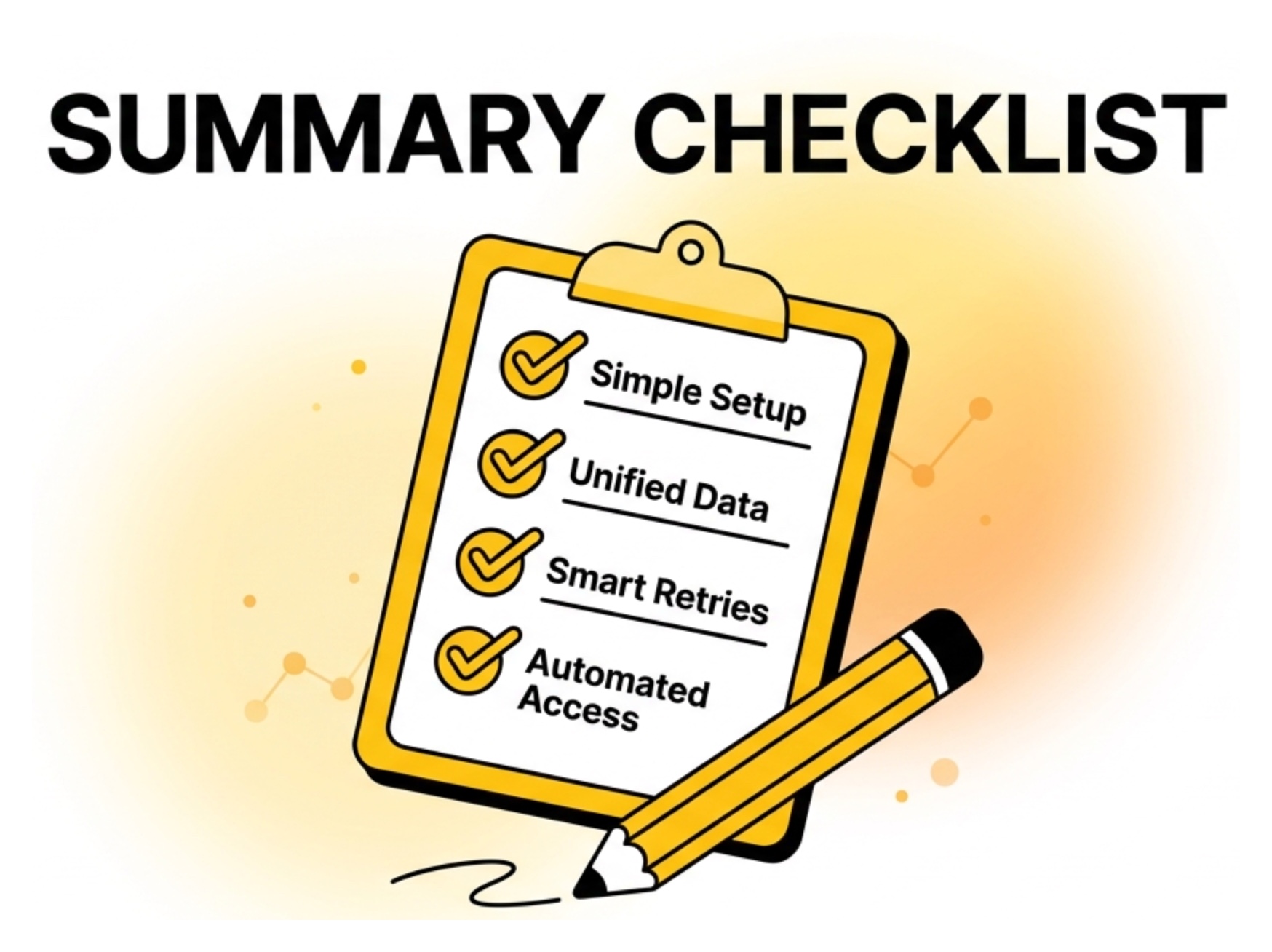
Key Takeaways:
- Start simple - most startups overestimate how much customization they need
- Connect your billing to authentication - when these systems don't talk, you give away your product for free
- Smart payment retries recover 15-20% more revenue than aggressive approaches
- Track involuntary churn closely - it's preventable revenue loss
- Calculate your true costs - add up all tool subscriptions plus developer time
Ready to Simplify Your Subscription Operations?
You can build this stack yourself, or you can use a platform designed to do it for you.
Outseta offers a complete solution for SaaS and membership founders. Instead of juggling five different tools, you get subscription billing, authentication, CRM, email marketing, and help desk in one unified platform.
Why Outseta?
- Save money - pay for one tool instead of five
- Launch faster - no integration code or connection headaches
- Scale better - unlimited team members and unified customer data
Start your 7-day free trial → Outseta.com
Choose a system that lets you focus on building your product, not fixing billing infrastructure.
Try Outseta free for 7 days—you'll have access to every feature. Cancel any time.

On this page
Get our newsletter